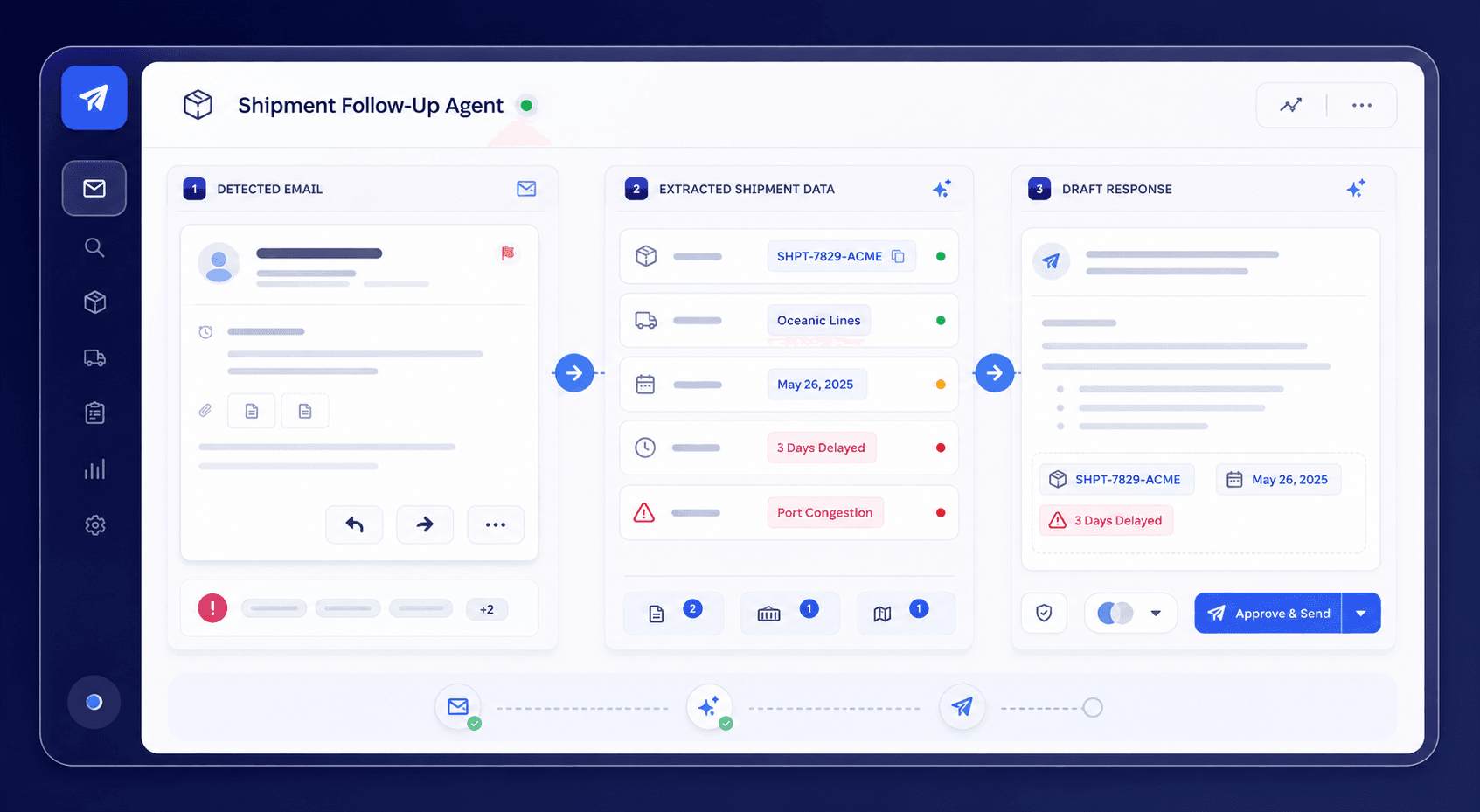
Dispatch Allocation
DISPATCH ALLOCATION
copying data between systems
We streamline data entry, follow-ups, status updates, and reporting across warehouse, transport, and customer coordination so your team can focus on execution instead of repetitive admin.
Get a custom action plan to cut manual work, improve visibility, and speed up dispatch decisions.
Dispatch Allocation
DISPATCH ALLOCATION
copying data between systems
Status Follow-ups
STATUS FOLLOW-UPS
chasing updates across email, phone, and internal teams
Customer Updates
CUSTOMER UPDATES
manually updating customers
Exception Handling
EXCEPTION HANDLING
fixing stock or shipment exceptions
Team Handoffs
TEAM HANDOFFS
pushing information from warehouse to transport to customer service
Billing Handoff
BILLING HANDOFF
delaying billing and admin after the work is already done
This creates extra pressure, slows down decisions, and takes time away from actual operations.
Manual work tends to build up in the same places:
If your team is spending too much time checking, updating, forwarding, or following up, there is usually a better way to run that workflow.
We improve the workflows behind manual logistics work so teams can execute faster with less repetitive coordination.

Reduce repeated updates across tools and spreadsheets.
Keep shipment and order follow-ups moving without manual chasing.
Handle stock and shipment exceptions with faster handoff rules.
Make reporting and client communication more predictable.
We start small and keep it practical. The goal is to improve one workflow first, prove the value, and keep the process easy to measure.

We review one workflow that is creating repeated manual work.

We identify where time is being lost across systems, people, and handoffs.

We design and implement a practical solution in 2-4 weeks.

We review the impact over the next 30 days.
Most teams start with one of these:
dispatch and order coordination
shipment status update workflows
warehouse exception handling
customer reporting
billing handoff after shipment completion
warehouse-to-transport communication
The goal is not more software. The goal is measurable operational improvement:

Less manual work. Better reporting flow.
less manual work
fewer missed updates
faster handoffs
better reporting flow
smoother day-to-day operations
Book a free 15-minute workflow audit and we will help you identify one workflow to improve first.
Book Free AuditNot ready for a call? Send us one workflow problem your team deals with every week, and we will tell you where to start.
We help logistics teams reduce manual work in day-to-day operations. This includes repetitive data entry, status follow-ups, reporting, exception handling, and coordination between teams.
No. We work around your current systems and workflows where possible. The goal is to improve how work moves across your operations, not force a full system change.
No. This is about workflow and process improvement inside logistics operations. We focus on the manual work happening between systems, teams, and updates.
Common starting points include dispatch coordination, shipment status updates, warehouse exception handling, customer reporting, and post-shipment billing handoffs.
We usually begin by reviewing one workflow. If there is a clear fit, the first practical solution can usually be designed and implemented in 2-4 weeks.
Because it keeps the process focused, practical, and easy to measure. It is the fastest way to reduce risk and show operational value.
We usually look at things like time saved, fewer manual follow-ups, fewer process errors, faster handoffs, and smoother reporting or admin flow.
No. We usually work with a small set of decision-makers and operators who understand the workflow well enough to help define the current process and review improvements.
This is a good fit for 3PL teams, warehousing operators, contract logistics businesses, and transport operations teams that still depend heavily on manual coordination.
We look at one workflow that is creating repeated manual work, identify where time is being lost, and discuss whether there is a practical way to improve it.
That is fine. We do not start with everything. We start with one workflow that is causing clear operational friction and improve that first.
No. The focus is on practical workflow improvements that solve day-to-day operational problems without turning the work into a heavy project.